
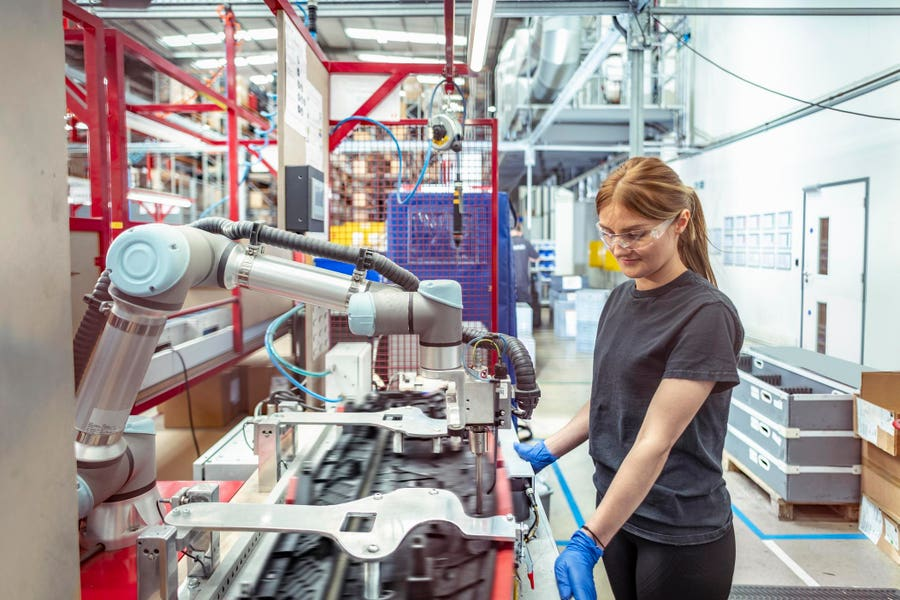
Industrial cobots are transforming modern manufacturing by enabling human operators and robots to work collaboratively, boosting efficiency, precision, and safety. These collaborative robots handle repetitive, hazardous, or high-accuracy tasks, allowing production lines to operate more smoothly while reducing errors and operational risks.
This article explores the impact of industrial cobots, their applications, collaboration with humans, economic and operational benefits, technological advancements, and their role in shaping the future of manufacturing.
Key Benefits of Industrial Cobots
1. Efficiency
- Cobots can work continuously alongside humans, reducing downtime and speeding up production.
- Safe operation without large safety barriers makes workflows smoother and more productive.
2. Precision
- Built for high-accuracy tasks, cobots excel in repetitive and complex operations.
- Advanced sensors and control systems ensure consistent results.
3. Safety
- Built-in motion sensors and force limits detect and respond to human presence.
- Cobots can work safely in shared spaces without extensive safety cages, preventing workplace injuries.
4. Cost-effectiveness
- More affordable than traditional industrial robots.
- Easy to program and deploy, offering faster return on investment (ROI).
- Improve productivity and reduce operational costs shortly after implementation.
Applications of Cobots in Manufacturing
Collaborative robots enhance efficiency, precision, and safety across a wide range of tasks:
1. Machine Tending & Assembly
- Load/unload machines like CNCs and injection molding presses.
- Handle tasks like screwdriving and component placement with high precision.
- Reduce human exposure to repetitive or hazardous tasks.
2. Quality Inspection
- Equipped with advanced vision systems to detect defects in real time.
- Improve inspection accuracy and reduce human errors.
3. Material Handling & Logistics
- Transport materials, palletize, sort, and move components within facilities.
- Collaborate safely with human workers while streamlining workflows.
4. Packaging & Palletizing
- Automate case packing, labeling, and palletizing.
- Enhance throughput, reduce labor costs, and maintain smooth operations.
Collaboration with Human Workers
Human-robot collaboration combines human creativity with robotic efficiency, improving productivity, job satisfaction, and workflow.
1. Enhancing Teamwork
- Cobots work safely alongside humans in shared spaces.
- Assist with tool handing, supporting assembly, and providing real-time feedback.
2. Freeing Humans for Creative Tasks
- Take over repetitive, dangerous, or physically demanding jobs.
- Humans focus on complex and creative activities, such as planning and problem-solving.
3. Collaborative Workflows
- Humans and cobots share workspaces to perform tasks simultaneously.
- Example: a cobot passes components to a human worker for quality checks or adjustments.
4. Advanced Tools for Collaboration
- Augmented Reality (AR) provides real-time guidance, enabling natural interaction with cobots.
Economic and Operational Benefits
Economic Benefits
- Lower Labor Costs & Less Rework: Cobots handle repetitive/dangerous tasks, reducing errors.
- Fast ROI: Increase productivity and minimize errors for rapid cost recovery.
- Flexibility: Reprogrammable and redeployable for both high-volume and custom production.
- Improved Competitiveness: Enhance efficiency, quality, and safety to stay ahead in the market.
Operational Benefits
- 24/7 Operation with Minimal Downtime: Operate continuously, even without supervision.
- Enhanced Workplace Safety: Sensors and force-limiting features prevent accidents.
- Scalability and Easy Integration: Lightweight, plug-and-play design, suitable for any business.
- Improved Quality Control: Detect defects missed by humans, ensuring high product quality.
Technological Advancements Driving the Future of Cobots
Recent innovations are making cobots smarter, more adaptable, and better integrated into modern manufacturing.
1. AI, Machine Learning, and IoT Integration
- Learn and Adapt: Machine learning allows cobots to analyze data and adjust actions.
- Enhance Perception: AI-powered vision recognizes objects, detects defects, and navigates complex environments.
- Real-Time Decisions: IoT sensors provide live data for quick responses.
2. Predictive Maintenance and Real-Time Monitoring
- Monitor Performance: Sensors track operations to prevent downtime.
- Predict Maintenance Needs: Anticipate issues and extend cobot lifespan.
- Optimize Workflows: Data-driven insights improve efficiency and reduce risks.
3. Increased Autonomy and Adaptability
- Autonomous Operation: Minimal human supervision needed.
- Dynamic Adaptation: Adjust to environmental or task changes.
- Collaborative Intelligence: Cobots coordinate as a team, sharing data for optimal performance.
Conclusion
Industrial cobots are transforming modern manufacturing by blending human creativity with robotic precision. They safely handle repetitive, hazardous, and time-consuming tasks, improving efficiency, safety, and product quality.
With AI, machine learning, and IoT, cobots are becoming smarter, more autonomous, and adaptable. They are trusted partners in creating safer, smarter, and more flexible manufacturing for the future.